Wednesday, August 20, 2014

Let's Get It Right

It cannot be said enough...in order for change to occur... all of us must participate in the process and create the reality we seek and so deserve.  Every step we take and every opportunity we have to make our collective voices to be heard... everyone must be engaged to ensure that outcome.  We can’t wait or depend on others to understand, appreciate or embrace our values, culture, ethnic background, needs or spiritual heritage.   In the words of Mahatma Gandhi...“You must be the change we wish to see in the world.”
    
What happen in Ferguson, Missouri this past week is nothing new, but rather is a continual narrative in the American experience over the past 400 years.  The tragic loss of life of an unarmed Black male teenager at the hand of law enforcement continues to raise red flags and is a failure of the system, policy, lack of training and just common sense.  But what this event also uncovered was a failure of leadership, teamwork, outreach, partnerships and civic engagement.  It is clear that the failure was on all fronts... and many of those fiascoes carried on for several days and violated some civic rights.  In so many ways... some things could not have been handled worst.  In addition, there was a lack of professionalism, high levels of hostility and poor judgment.  Well... here is the real shocker... Ferguson, Missouri is not alone. 

It cannot be understated that there are a number of communities in America like Ferguson that need to make serious changes.  These changes include leadership, workforce, policies, voting and improving community relations.  We must come to grip with the fact that a number of cities need to make a transition as well as a  transformation.  People must be aware that no system is perfect, but any system must be reflective of meeting the ongoing needs of the people they are intended to support.  And of course that means it has to have both checks and balances.     
       
It is unclear what the outcome of all the events that occurred in Ferguson, however one thing is for certain, the city and its residents will never be the same. Things will change and it will take the residents to make those critical changes and not from outsiders.  Residents in other similar communities across the nation will need to learn from the failures of Ferguson and chart a new course.  The loss of any young person to gun violence is one too many and if we are to learn anything from Ferguson is to make sure we get it right and pass those lessons on. 

What do you think?           
 

Wednesday, August 13, 2014

The New Normal


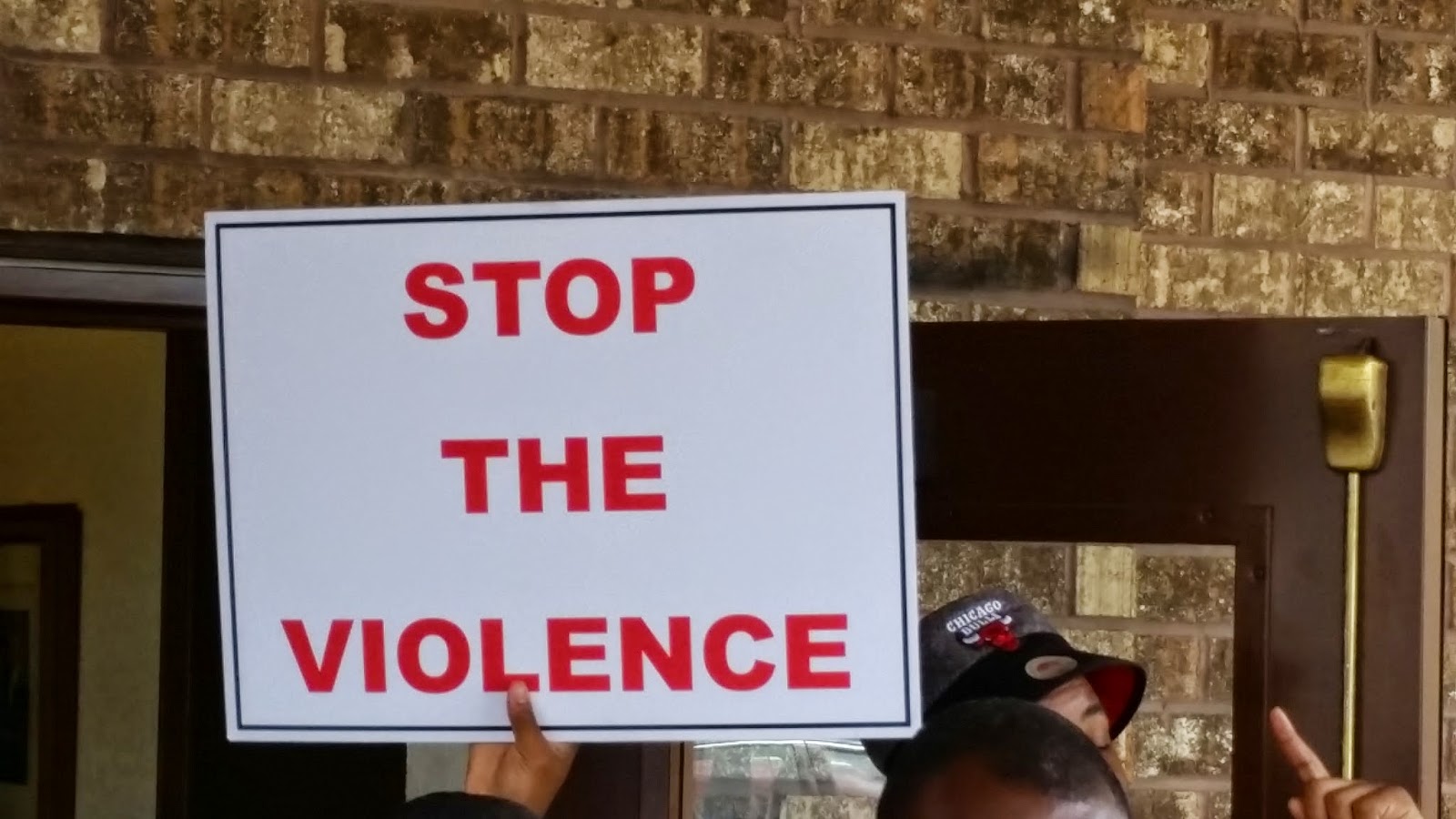
We all know that it continues to happen... no one should be surprise by it.   But each time it happens... something else in the narrative just seems unthinkable.  In a nutshell, gun violence in America should be officially labeled as a disease and treated as such.  We need to find a cure for this new disease that is affecting our quality of life and certainly  plaguing our communities.  Of course there are a lot of root causes that feed into this new disease, including poverty, hopelessness, unemployment, mental illness, lack of education, racism, prejudice, neglect, self-worth, wealth, policy and social status.       
In a recent report by the Children’s Defense Fund, “The State of America’s Children 2014” paints a clear picture of what is occurring.  This report is just “eye opening and jaw dropping” and is a report card that reveals just how deep the “rabbit hole” is.  I must warn you that this report could be too much to handle for many and will require some time to process for most.  This report contains what most of us fear, hear about, or have seen firsthand in our communities... that gun violence is having a great impact on our youth.    

Here are some of the facts cited in the report: guns kill or injure a child or teen every half hour.  In 2010, 2,694 children and teens were killed by guns and 15,576 were injured by guns.  Guns killed more infants, toddlers and preschoolers than law enforcement officers in the line of duty.  US children are teens are 17 times more likely to die from gun violence than their peers in 25 other high-income countries.  Since 1963, three times as many children and teens have died from guns on American soil than US Soldiers killed in action in the Vietnam, Afghanistan and Iraq wars.   In 2010, Black children and teens were nearly five times and Hispanic children and teens were more than three times more likely to be killed by guns than White children and teens.  The US military and law enforcement agencies possess 4 million guns, US civilians have 310 million.  Every year American companies manufacture enough bullets to fire 31 rounds into every one of our citizens. 
As you can see, there is a need for some fresh ideas to deal with our addiction to guns and the impact it is having on our future.  If we are unwilling to deal with this long term problem, there will be no end in sight and this new normal will become permanent.  Additionally, this report is not along in painting the picture of our nation that is in serious trouble with its future generations, but also a nation that is in trouble in its defense of it true principles and its moral compass.  What do you think?    


Tuesday, August 5, 2014

If Not Us, Then Who?


The most glaring challenge in the 21st century for the African American community is how to be unified on issues.  This a tall order and cannot be underestimated.  This reality is played out each and every day, especially during times of crisis within the community.  The issues could include stopping the violence, fair employment, quality health care, affordable education or erasing poverty.  However, the critical questions are... “Who is leading the charge? Who will speak on the issues? and most importantly, who understands what needs to happen, has the ability to articulate what is going on and is able to bring people together in order to deal with the issue at hand?  
Today, there are a lot of people trying to speak for the African American community, even though many are out of touch with what is really going on within the community.  From what I see and hear, there are a lot of people who are disconnected from the real issues.  Amazingly, some look like us, some sound like us and some pretend to be us, if only for a moment.   There are some who just don’t even care, but only want to be heard, out for themselves, and are seeking to see what is in it for them and nothing more.    

In doing a reflective review of history, it is easy to see that during every generation leaders have always emerged to provide leadership to communities, cities, churches, businesses and movements.  For some of these leaders, history will kind to them in regards to what they were able to get done, obstacles overcome and choices made.  For other leaders, history will be harsh on them in terms as being a divider, non-caring or polarizing.   Still others will be judged with being effective, while being remembered as doing something with good intentions.  There are way too many people who talk a good game, but at the end of the day, that is all they have is talk, while the results remain the same.  
It is important for us to remember, you can never lead people to a place where you have never been before or are willing to take the necessary “risk” to ensure success.  That is perhaps the bottom line; people do not like to take “risks,” to “put skin in the game,”...neck on the line,” or to “go all the way,” regardless of the outcome.  There are no clear paths to positive outcomes along this journey and if you think we are having a tough time, just take a look at the leaders in history.  Now, how is that working for you?      

Tuesday, July 29, 2014

Being Relevant

As this new century continues to march forward, one of the greatest challenges for most of us is how to remain “relevant” in a modern age.  Within this challenge are the central questions of how to remain connected to the matters at hand and how do we communicate with others to get our message out?   

Today, a lot of capital is being spent by major companies, both large and small, on how to remain at the top of their industry sector or in business at all.  It is not an option any more, gone are the days when people could depend on traditional brands, newspapers, media broadcasts and messages from industry standards.  The landscape has changed greatly and the old “guards” are struggling to keep up in “connecting” with the up and coming new generations of “X” and “Z” of consumers, voters, and diversity and business leaders.  I have to agree with you, that many of the old problems of poverty, housing, livable wage employment, crime and health care will persist, regardless of the times.    
We are not in “Kansas” anymore and the “Old South” is slowly changing.  Before you know it, the America of old will be no more and a new world order will be at hand.  No one is quite sure what that will look like or mean but we all know that it is coming.  Once you could buy newspapers at the local newsstand, read it in your den, in the park, go to the library, talk about things at the local barber/beauty shop and discuss things at the kitchen table.  But those days are all but gone... now its laptops, online video streaming, smart phones, tablets, it’s now news 24/7 at your fingertips.

If we want to remain in business, sell your products, maintain a certain market share, create a new client base, cross over into new demographics, to go global... then we have to remain "relevant" to the changing times.  These are new times...there are new technology tools in which to connect and communicate with others on "matters that matter" and are at hand.   

Additionally, we must be able to get people fully engaged in an experience of an idea, product, brand, candidate, or cause, one that not only changes behavior, but changes minds, and sustains that change.  This can only occur when we understand the value systems of people, their senses, and social perspectives.  We can never assume that our views are the same as those who we wish to connect with.  Urban America always stands ready for a new connection and a new message... and it’s all “relevant.”  What do you think?    

Tuesday, July 22, 2014

To Tell The Truth


“What is your name, please?”

This was the opening question by the game show host of “To Tell The Truth.” Each week the three challengers were asked the same question, as they were introduced to a celebrity panel and to the audience.  In response each challenger would then state, “My name is ...."   It is after each challenger gives the same response, that a celebrity panel would begin asking questions of each challenger.  The central goal was to determine who is telling the truth about themselves and who the impostors are.   

Each panelist were given a period of time to question the challengers and questions were clearly directed to each challenger in the form (number one, number two and number three).  Only the central character is sworn to give truthful answers and the two impostors are permitted to lie or pretend to be the real or central character.  After all the questioning is completed, each member of the panel votes on which of the three challengers they believe is the real character.  They would then cast their vote by writing the number on a card and holding it up revealing their choice.  This would be done without the panelists consulting among themselves.    If a panelist knows one of the challengers, they were required to recuse themselves and their vote would not count. 
 
Once the votes were in, the host then asks, “Will the real (person’s name)... please stand up?”  Then the real character would stand, often after some brief playful feinting, false starts and strange looks among the three challengers.  Later, the two impostors then would reveal their real names, actual occupations and where they were from. Prize money was awarded to the challengers based on the number of incorrect votes the impostors received. 
   
What a great show, its popularity helped it to last 25 seasons on networks and in syndication.  It is only one of five game shows that aired at least one new episode in at least six consecutive decades.  The other shows are “The Price is Right, Let’s Make a Deal, The Newlywed Game and Jeopardy,” and they are still running today.   That is amazing for a game show that began in 1956 and ended in 2001 continues to speak and impact us today.
 
What is happening in the inner cities of America, with the high levels of disparities and more, it’s time “To Tell the Truth.”  This is not a game, when the qualities of people lives are at stake, rising poverty, increasing crime, poor schools, high incarceration and outsourcing jobs (not just overseas), but out of community are still pledging us.  It's is not a game, when it appears that there are too many impostors and not enough real people to stand up for urban America.  It's not a game, when the people that are affected the most are not even at the table.   Of course the makeup of the panel is also a big question mark.  What do you think?           

Monday, July 14, 2014

Running With The Pack

One of the most exciting races at all major track and field events is the men and women 4 x 100 meter relay races.  This is by far my personal favorite event and demonstrates more than just a race.  In my humble opinion it requires each member of the relay team to perform at their personal best, while at the same time be in sync with the other members of the team when the time comes in passing the “baton.” 

This race has it all, individual ability, teamwork, speed, knowledge and skill.   You talk about teamwork, coordination, timing, talent, logistics, decision making, being focus, and depending on others to come through in doing their personal best.  And of course, let us not forget having an appreciation and a healthy respect for the competition.  Just because you showed up, dressed to look the part, does not mean “winning” the race is a given.  For some of the most talented teams in history never won on the biggest stages.  The winning teams of these kinds of races are usually the ones who continue to practice doing the small things well, refining their technique, and a winning attitude.

The critical moments of these relays include having a great start out of the block, clean handoffs at each 25 meters, maintaining speed during the three turns, speed in the straight away and a strong kick by the last sprinter (the anchor)… WOW!!! What a performance… and what a trilling moment… to witness that during the last turn the passing of the “baton” to the anchors across all lanes… and for a moment you see the pack, side by side and all the well knowing that the pack is only together for a moment and soon one, two or three anchors will emerge from the pack and take the lead down the home streak towards the finish line.  And only one team is declared the winner.  
Just like what it takes to win in the 4 x 100 relays… our urban American community team need the same amount of attention and support.  If urban America is going to make a comeback, its residents, pastors, faith leaders, churches, grass root leaders, block clubs and associations must be seen as team members in solving problems.  They should not be invited to participate when decisions and game plans have already been made, but are only asked for input, ideas and involvement on what others have perceived already.  No urban American community team can win any race when the most important part of the team is being left out of the picture, always being stuck in the “pack” for a photo op or media session.  A winning team is one that relies on each of its members to use their abilities to make the team a “winner” during every race.  All the urban America community team need is someone to pass the “baton” and we can take it home.   WOW! Wouldn’t that be great?    What do you think?      


Tuesday, July 8, 2014

Seeing The Forest

“Can’t see the forest for the trees,” is a figure of speech (or idiom) that some use to describe when people are having a hard time seeing a larger perspective of a particular situation.  This figure of speech requires that one should be able to understand the whole if one can understand the meaning of each of the parts that make up the whole.  We use idioms or figures of speech nearly every day to best describe what is going on, including… it is not rocket science…you are pulling my leg… the devil is in the details… the early bird catches the worm… it’s raining cats and dogs…kicked the bucket… break a leg, how do we get to the bottom of this situation?... and Oh no! You spilled the beans?” to just name a few.        

In the figure of speech “can’t see the forest for the trees,” the meaning is that one looks at things one at a time and might not realize that a branch of separate trees go together to make a forest.  It also means that one can focus in on the various details in particular and might failed to see the overall view, impression, key points or long view.  In other words, many often lose sight of the big picture by getting themselves mired down into the details, while not fully understanding that some issues are interconnected.  
Each week, I encounter a number of people in our community who are solely focused on one or more details of a problem.  And that is “OK” in my book, we need people working on various issues to help us all live better, do better, live longer and to act better.  There is no doubt about it, we need committed people to be advocates for better health care, quality of education, affordable housing, livable wage employment, incarceration, racism, voting, running for public office and economic development.  We need all the help we can get and then some.  But we also need people to understand that the problem they are dealing with is also larger, interconnected with other issues and together the “picture” or “mosaic” is something to see and framing it up is a far greater task.    

All situations, regardless of size or scope has a history, roots and a reason why behind it.  Just because a situation has ended in some aspects, laws passed decades ago, a new generation, times has change; does not mean it has not left a legacy or residual effect… for some people have not gotten the memo, email or text yet.  Perspective is what we need and to keep in mind when dealing with the details.    What do you think?       

Rocking The Boat

  There are a number of reasons as to why boating accidents continues to rise each year across America.   According to the US Coast Guard...